

Every few months a new crypto name starts trending in search, and people rush to figure out what it is before they miss out. Over the past year, one of those names has been Etherions. Search for it and you’ll find bold talk of a fast blockchain called Faston, a token called EFC, and collectible digital creatures you can breed and battle. You’ll also find plenty of confusion, because the details change depending on which page you read.
If you’ve been trying to learn about etherions .com, you’re probably asking simple questions. Is it an exchange? A game? A crypto project you can invest in? Or just a website writing about all of these things? Those are fair questions, and the honest answers matter more than the hype. This guide covers what the site is, what it claims, what has and hasn’t been verified, and how to protect yourself when you run into projects like this.
This isn’t a promotional review, and it isn’t a hit piece either. It’s a clear, practical explanation for curious readers, beginners in crypto, and anyone who wants to understand the story before putting time or money into it. By the end, you should be able to look at Etherions, or any similar project, and judge it for yourself.
What Is Etherions .com?
Put simply, etherions .com is a content website. It publishes articles, mostly around a crypto concept it calls Faston Crypto Etherions, usually shortened to EFC. Many readers expect a dashboard where they can buy tokens, connect a wallet, or play a game. What they actually find is a set of blog-style posts describing a blockchain ecosystem, its token, and its NFT creatures. Getting this distinction right is the first and most important step in understanding what you’re dealing with.
That distinction matters because anyone can write that something “exists” or is “launching soon.” Writing about a token is very different from running a working network with a public contract, a live marketplace, and real users trading on it. When people search for information about etherions .com, they often treat these as the same thing. That’s where the confusion starts.
A Blog-Style Site, Not a Trading Platform
The site reads more like an online magazine than a crypto product. You won’t find a verified token contract or a working wallet integration that lets you test what the articles describe. The posts explain things like how EFC is supposed to power transactions, how staking is supposed to reward holders, and how the Etherion creatures are supposed to work in a game. They’re written in an explainer style that a newcomer can follow easily, which is partly why they rank well and get shared.
That style isn’t a problem on its own. Plenty of honest websites explain crypto concepts in plain language. The issue is that readers need something solid behind the explanation, such as a whitepaper with a real link, a named team, or a contract address they can look up. Without those, the articles describe an idea, not a product you can verify.
The Wide Mix of Topics
The site, along with related domains using similar names, doesn’t stick only to crypto. Independent reviewers have noticed posts on unrelated subjects such as gambling, health, and home repair. That’s common for websites built mainly to capture search traffic across many trending keywords. It isn’t proof of anything bad. It does suggest the site works more like a general publisher than the official home of a dedicated blockchain team.
For comparison, the official websites of serious crypto projects usually focus tightly on their technology, documentation, developer tools, roadmap, and governance. A mix of crypto explainers and lifestyle content is a sign that you should treat the information as commentary, not official documentation.
The Faston Crypto Etherions Story Explained
To understand why so many people are curious, it helps to look at the story the content tells. Across the articles, Faston Crypto Etherions is presented as an all-in-one ecosystem combining three popular ideas from the last crypto cycle: a fast blockchain, an NFT gaming layer, and decentralized finance tools. Each idea on its own has drawn huge interest and investment over the years. Bundled together, they make a story that’s naturally appealing.
What the EFC Token Is Said to Do
According to the articles, EFC is the native token that powers everything. It’s described as the currency for buying and breeding Etherions, the asset you stake to earn rewards, and the voting token for governance decisions. In theory, this is a familiar model. Many real blockchain games use a native token for in-game purchases, rewards, and community voting.
The trouble is in the details. Different articles give different total supply figures, with numbers ranging from 10 million to 100 million to 800 million tokens. Fees are described as anywhere from a tenth of a cent to a full cent per transaction, and staking rewards are called “predictable” without any actual rate. A real token has one supply figure that anyone can check on a block explorer. When the numbers keep changing between articles, it usually means nobody is reporting from a single verified source.
Etherions as NFT Digital Creatures
The most eye-catching part of the story is the creatures themselves. Etherions are described as unique NFT-based digital beings, each with its own traits, rarity level, and abilities. Users can supposedly train them, battle them against other players, trade them, and breed two together to create a new one with combined characteristics. If that sounds familiar, it’s because games like CryptoKitties and Axie Infinity made this exact model famous years ago.
Interestingly, the name has some history. Back in early 2018, an unrelated dapp game also used the name Etherions, with a small community discussing dragons growing to maturity. There’s no evidence connecting that old project to today’s Faston content, but it shows how names in crypto get reused, which adds to the confusion for anyone researching the topic. As of late 2026, reviewers have not found a playable Etherions game, a minted NFT collection, or a marketplace where these creatures can actually be traded.
The Faston Architecture Claims
On the technical side, Faston is described as the engine behind the network, usually called a “modified Ethereum architecture.” But the descriptions shift from article to article. Some call it a standalone layer-one blockchain, others call it a fork of Ethereum, and others describe a base layer with a second layer on top. The consensus method changes too, from proof of stake to a “rotating committee” to a “hybrid consensus mechanism.” Speed claims run from “thousands of transactions per second” to more than 10,000 per second.
Any one of these designs could be a legitimate architecture. A real project, though, picks one, documents it in technical detail, and lets developers test it on a public testnet. Contradictory technical descriptions are one of the clearest signs that the content is being written loosely rather than drawn from real engineering documents.
Claims Versus What Has Been Verified
The easiest way to make sense of all this is to put the claims side by side with what independent checks have actually found. The table below summarizes the main points as of November 2026.
| Feature Claimed | What the Content Says | Verification Status |
|---|---|---|
| EFC Token | Native token for payments, staking and governance | No public token contract found |
| Token Supply | 10M, 100M or 800M, depending on the article | No on-chain data supports any figure |
| Faston Network | Modified Ethereum, fork, or layer-one design | Descriptions conflict; no testnet found |
| Transaction Speed | Thousands to 10,000+ per second | No independent benchmark available |
| Etherion NFTs | Breedable, tradable battle creatures | No game, collection or marketplace found |
| Exchange Listing | Headline claims a major exchange listing | No official exchange announcement found |
| Team | Credited to “Etherions Team Faston” or “Michael Faston” | No verifiable named founders |
| Whitepaper and Audit | Whitepaper “published in 2025,” “formal audits” | No link or named auditor provided |
Looking at this table, the pattern is easy to see. Almost every major claim falls into the same category: described in detail, but not backed by anything a reader can check. That doesn’t automatically mean anyone is acting in bad faith. It does mean you can’t treat EFC as an established, tradable asset today.
Why So Many People Are Searching for It
Search interest around Faston Crypto Etherions has been growing since late 2024, and there are clear reasons for it. First, the name itself is catchy and mysterious. It blends “Ether,” which instantly brings Ethereum to mind, with a fantasy-sounding creature name. People who see it mentioned on social media naturally want to know what it is. Second, many websites have published near-identical explainer articles on the topic, which creates a feedback loop. More articles produce more search results, and more search results make the project look bigger than it may actually be.
Third, there’s genuine nostalgia for NFT gaming. Many people remember the early days of breeding digital pets and earning tokens from play, and a project promising a faster, cheaper version of that experience taps straight into that memory. When people look for information about etherions .com, they’re often hoping to find the next early opportunity. That hope is exactly why careful research matters so much in this space.
Red Flags Worth Noticing
Experienced crypto researchers rely on a fairly standard set of warning signs when judging a new project. These signs don’t prove a project is a scam, but each one should make you slow down and dig deeper. Several of them apply when you look closely at the claims around etherions .com, and it’s worth knowing them so you can spot them elsewhere too.
- No public contract address, audited whitepaper, or verifiable development team
- Conflicting figures for supply, speed, and fees across different articles
- Claims of a major exchange listing with no matching announcement from the exchange
- A ticker symbol, EFC, that’s already used by a different, unrelated token
- Website content that jumps between crypto and unrelated topics like gambling and health
There’s also a separate point that confuses some readers. New Zealand’s financial regulator has issued an alert, also listed on the international IOSCO warning portal, about a different platform with a very similar name, Etherion. No connection between that platform and the Etherions content sites has been found. The near-identical names, though, are a good reminder to check exact spellings and domains before trusting any crypto platform.
The EFC Ticker Confusion
One detail that catches out many beginners is the ticker. On major price-tracking platforms, EFC already belongs to the Everton Fan Token, a football club fan token with no link to Etherions or Faston. In late 2026 it traded at a few cents. If someone searches “EFC price” after reading about Faston Crypto Etherions, they may land on the Everton token’s chart and wrongly assume they’ve found the Etherions token.
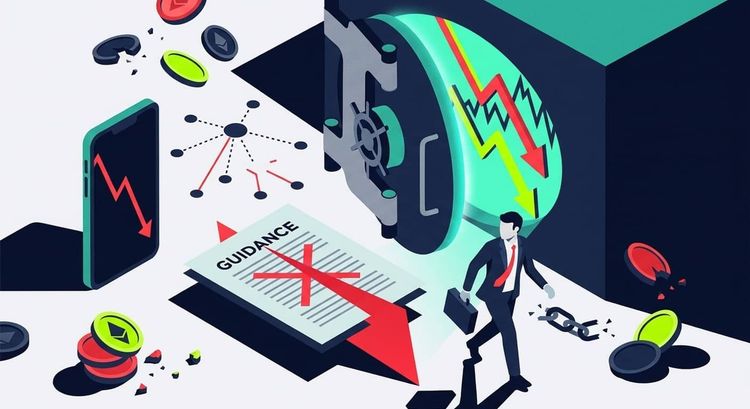
This kind of mix-up can be expensive. A newcomer might buy the wrong asset entirely, or a bad actor might use the confusion to sell a fake token that looks real. Before you act on any ticker, match three things: the project name, the ticker symbol, and the exact contract address. All three should line up on a reputable tracking platform and on the project’s own verified channels.
How to Evaluate a Project Like This Yourself
The good news is that you don’t need to be a blockchain developer to protect yourself. A few simple habits will filter out most risky projects before they cost you anything. These checks apply to Etherions and to any new token you come across, whether it’s mentioned by a friend, an influencer, or a trending article.
Start with the contract. Any real token on an Ethereum-style network has a contract address that you can paste into a block explorer to see its supply, holders, and transaction history. If a project can’t give you one, it doesn’t yet have a token you can safely buy. Next, check listings directly at the source. Exchanges publish official announcements for every new listing, so if an article claims a listing, the exchange’s own announcement page should confirm it. Then look for real people. Legitimate projects usually name founders or developers who have public professional histories you can verify.
- Search the contract address on a block explorer before buying anything
- Confirm exchange listings on the exchange’s official announcement page
- Verify any audit by contacting or checking the named audit firm directly
- Check regulator warning lists in your country before sending funds
- Never share your seed phrase or connect your wallet to an unfamiliar site
Following these steps takes maybe fifteen minutes, but it can save you from losses that are almost impossible to recover in crypto. If you’re writing or researching about etherions .com for a blog, a client, or your own curiosity, these same checks also help you present information accurately instead of repeating unverified claims.
Is Etherions .com Safe to Read?
Reading articles on a website is generally low-risk, and plenty of people visit etherions .com simply to understand the buzz. The real risk comes from what you do next. If any page or linked platform asks you to connect a crypto wallet, deposit money, or enter personal or financial details, that’s the point to stop and verify everything carefully. Consumer protection agencies such as the US Federal Trade Commission regularly warn that fake investment sites may show attractive balances but block withdrawals or demand surprise fees before releasing funds.
It’s also worth remembering that a number shown on a website is not proof that a token exists or has value. Real assets live on a blockchain, where anyone can confirm them independently. As of now, no regulator has issued a warning that specifically names Etherions, Faston, or EFC, but the absence of a warning is not a stamp of approval. Many risky projects operate for months before regulators catch up with them, so your own checks remain your best protection.
Who Might Find This Topic Useful
Despite the gaps in verification, the Etherions story is still worth understanding for several kinds of readers. Crypto beginners can use it as a real-world case study in how to research a trending token, since it shows clearly what’s missing when a project lacks contracts, audits, and named teams. Content creators and SEO writers can learn how trending crypto keywords spread across many similar websites, and why accuracy builds more long-term trust than hype.
Gaming and NFT enthusiasts may also find the concept interesting from a design point of view. The idea of a fast, low-fee network built for creature-based games is appealing, and if a legitimate team ever builds something like it with verifiable technology, the core idea could attract real players. Until that happens, the smart approach is to enjoy the concept as a concept while keeping your money safe.
Conclusion
Learning about etherions .com ultimately comes down to separating the story from the evidence. The story is attractive: a lightning-fast blockchain called Faston, a multi-purpose EFC token, and collectible Etherion creatures that you can breed, train, and battle. It combines some of the most exciting ideas crypto has produced in recent years, which is exactly why it draws so many curious searchers. The evidence, however, is still missing. As of late 2026, there is no verified token contract, no playable game, no confirmed exchange listing, no named team, and no published audit that anyone can check independently.
That doesn’t mean you need to dismiss the topic entirely. It means treating it the way experienced investors treat every new project: with curiosity, patience, and a firm habit of verification. Read the articles if you’re interested, but rely on block explorers, official exchange announcements, regulator warning lists, and named audit firms before trusting any claim. Watch out for ticker mix-ups like the EFC confusion, never share your seed phrase, and don’t connect your wallet to any site you can’t fully verify. If Faston Crypto Etherions ever becomes a real, transparent, working ecosystem, the proof will be easy to see on-chain. Until then, informed caution is your strongest tool.