

Technology is changing the way people communicate, work, learn, and manage everyday activities. From artificial intelligence and cloud computing to cybersecurity and advanced software development, digital innovation has become an important part of modern life. Businesses are adopting new technological solutions to improve productivity, individuals are becoming more dependent on digital platforms, and developers are continuously exploring better ways to create reliable applications. In this changing environment, understanding technical concepts and emerging digital approaches can help people make informed decisions about the tools and systems they use.
The term etherions technical can be explored through the broader perspective of modern technology, digital infrastructure, software innovation, and technical development. Rather than treating it as a confirmed technology standard or established software platform, it is useful to examine the technical areas that give this subject relevance in today’s digital environment. These include system architecture, data management, automation, artificial intelligence, online security, and the development of scalable digital solutions.
As technology becomes more interconnected, technical knowledge is no longer limited to professional developers or IT specialists. Entrepreneurs, students, content creators, and ordinary internet users also benefit from understanding how digital systems operate. Exploring these areas provides a foundation for recognizing technological opportunities, understanding potential risks, and preparing for future developments.
Understanding the Meaning of Etherions Technical
The phrase etherions technical can be approached as a broad technology-focused concept involving digital systems, technical knowledge, and innovation. However, the phrase alone does not establish a particular programming language, software product, blockchain protocol, or officially recognized technical framework. Understanding this distinction is important because technology-related terminology is frequently used in different contexts, and similar-sounding names do not necessarily represent the same product or service.
From a practical perspective, the subject can introduce readers to the foundations of modern technical environments. These foundations include the way applications communicate with servers, how information moves between digital platforms, how databases organize records, and how security mechanisms protect sensitive information. For example, when someone uses an online shopping application, several technical processes operate together. The application displays products, retrieves information from a database, processes requests through backend services, and communicates with payment systems. All these operations depend on coordinated technical infrastructure.
The Core Technical Architecture Behind Etherions
Technical architecture determines how a digital platform processes information, manages network communication, and maintains operational stability. According to the published technical overview of Etherions, its proposed architecture follows a modular peer-to-peer execution model that separates consensus processes from transaction execution. This separation is an important concept in blockchain engineering because it allows different system components to perform specialized tasks without making the entire network dependent on one tightly connected software structure.
A modular architecture can make software easier to maintain, test, and upgrade. For example, developers may need to improve transaction processing without completely redesigning the mechanism responsible for validating network activity. When these functions have clearly defined interfaces, teams can work on individual components while maintaining compatibility with the wider system. This approach is particularly useful for distributed applications that need to process multiple requests while maintaining predictable behavior.
Understanding the Main Technical Layers
A modular blockchain environment can contain several interconnected layers. Each layer performs a particular responsibility, and communication between them allows the complete system to operate as a coordinated network. The architecture described in the Etherions technical overview identifies four important components: transport, gossip, execution, and API.
| Technical layer | Main responsibility | Practical purpose |
|---|---|---|
| Transport | Moves network messages and transactions | Supports communication |
| Gossip | Shares information between network participants | Distributes updates |
| Execution | Processes transactions and contract operations | Changes application state |
| API | Provides access to network information | Connects external applications |
The transport layer handles communication between participating systems, while the gossip layer distributes relevant information across connected nodes. The execution layer processes transactions and applies state changes according to established rules. Meanwhile, the API layer provides an interface through which applications and developers can interact with network information. Together, these components demonstrate how a distributed system can divide responsibilities while maintaining coordination.
How Consensus and Network Communication Work
Consensus is one of the most important concepts in blockchain technology. In a decentralized environment, multiple network participants need a reliable way to agree on the order and validity of transactions. Without an agreement mechanism, different participants could maintain conflicting versions of the network’s transaction history. Consensus mechanisms address this challenge by establishing rules through which validators participate in confirming network activity.
The technical architecture described for Etherions discusses validator participation, proposal ordering, voting, and block finalization. In a typical consensus workflow, a participating validator proposes a block, other validators examine its validity, and the network follows its agreement rules before accepting the resulting state. Digital signatures help verify that messages originate from authorized participants, while cryptographic hashes provide a way to identify changes in recorded information. These mechanisms are fundamental to maintaining consistency in distributed environments.
Peer-to-Peer Networking and Node Management
Peer-to-peer networking allows participating computers to communicate directly instead of depending entirely on one central server. Every node may maintain connections with multiple other nodes, exchange information, and contribute to the distribution of network data. This arrangement can improve resilience because the failure of one participant does not automatically stop the entire network from communicating.
Node management also requires attention to connection quality. Latency, bandwidth, connection stability, and available services can influence which peers a node communicates with. For instance, a node handling frequent application requests may benefit from maintaining connections with responsive peers, while a system used for historical data retrieval may need access to archival information. Health checks and connection monitoring help administrators identify problems before they affect application performance.
Smart Contracts and Transaction Processing
Smart contracts are programs that execute predefined instructions when specified conditions are satisfied. They are widely associated with blockchain ecosystems because they allow developers to create automated applications that operate according to transparent rules. Examples include digital asset transfers, automated payments, decentralized financial services, and NFT marketplaces. Instead of requiring every operation to be handled manually, smart contracts can execute programmed actions when the necessary conditions are met.
In the technical model discussed for Etherions, smart contract execution is associated with a deterministic virtual machine. Deterministic execution means that the same valid input and starting state should produce the same result when processed under identical rules. This consistency is essential because different network participants must be able to verify the same transaction outcome. Gas metering also plays an important role by measuring computational resources and helping prevent applications from consuming unlimited network capacity.
Understanding Transaction Data Structures
A blockchain transaction contains information required to identify, process, and verify an operation. The network may use details such as the sender’s account, transaction sequence number, computational limit, and transaction payload. Once a transaction is processed, the system can generate a receipt containing information about its execution result and resource consumption.
Blocks organize validated transactions into a structured record. A block header can contain a reference to the previous block, a timestamp, and cryptographic information representing the network state. These details help maintain the relationship between successive blocks and support verification. Understanding these structures makes it easier for developers to examine how decentralized applications communicate with blockchain infrastructure.
APIs and Developer Integration
Application programming interfaces, commonly known as APIs, allow separate software systems to communicate with one another. They are essential in modern technology because most applications depend on multiple services working together. A blockchain application, for example, may need to retrieve transaction details, submit a new transaction, display account information, and monitor contract events. APIs provide standardized methods for performing these operations.
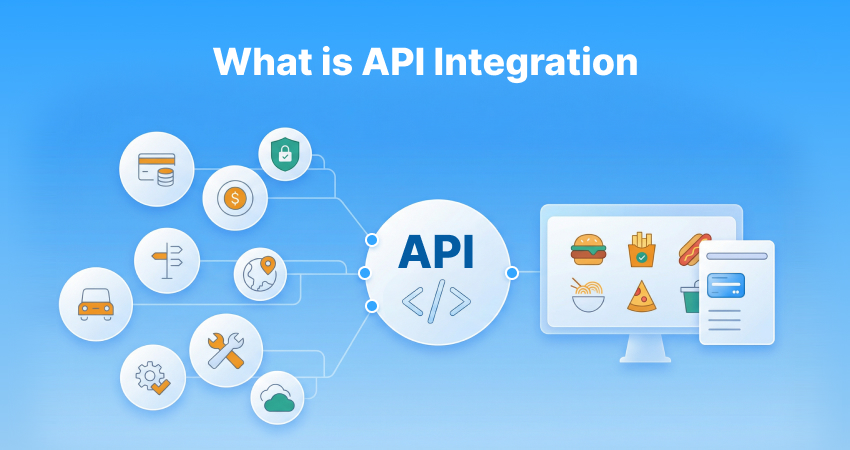
The technical overview describes several types of access, including remote procedure call interfaces, streaming services, and indexing endpoints. RPC interfaces allow applications to request information or submit operations. Streaming interfaces can provide continuous updates about events, while indexing services organize blockchain information into formats that are easier to search and analyze. These methods help developers create applications without manually processing every piece of network information.
A software development kit can make integration more convenient by providing reusable functions, predefined data structures, and error-handling mechanisms. For example, a developer building a digital wallet may use an SDK to communicate with a blockchain network rather than writing every networking operation independently. However, developers should always verify available documentation, supported versions, and actual implementation details before relying on any claimed integration capability.
Security and Data Protection in the Etherions Ecosystem
Security is a major requirement for every blockchain-based application. Decentralized systems handle transactions, account information, digital assets, and application data, making them potential targets for malicious activities. A strong security approach must therefore protect communication, verify identities, validate transactions, and prevent unauthorized operations. The etherions technical model highlights several security concepts that are relevant to building dependable blockchain infrastructure.
Cryptographic signatures help establish the authenticity of transactions and messages. Input validation prevents incorrectly formatted requests from entering important processing stages. Replay protection helps stop previously submitted messages from being reused inappropriately, while execution sandboxing limits the resources available to individual programs. These mechanisms serve different purposes, but they work together to reduce common security risks.
Important Security Practices for Developers
Developers and network administrators should consider several security practices when designing decentralized applications:
-
Input validation: Check transaction data and application requests before processing them.
-
Signature verification: Confirm that transactions have been authorized by the appropriate account.
-
Resource management: Apply reasonable limits to prevent excessive computational consumption.
-
Security audits: Review smart contracts and application components for vulnerabilities.
Security should not be treated as a one-time activity. Software changes, new integrations, and evolving attack methods can introduce vulnerabilities even after an application has been successfully launched. Regular testing, dependency updates, code reviews, and monitoring are necessary to maintain a reliable environment.
Deployment, Performance, and Scalability
Deploying a blockchain application involves more than installing software on a server. Developers need to consider infrastructure requirements, configuration management, network connectivity, storage, and ongoing maintenance. Containerization is one approach that helps teams package applications and their dependencies into consistent environments. This can make deployment more predictable across development, testing, and production systems.
The etherions technical architecture discusses containerized execution engines and immutable configuration practices as potential deployment approaches. These techniques can help development teams maintain consistent settings and manage software updates more efficiently. For example, if a new application version introduces an unexpected problem, administrators can use version-controlled deployment procedures to investigate the issue and restore a previously working configuration.
Scalability is another important consideration. As the number of users and transactions increases, an application must manage additional workloads without experiencing unacceptable delays. Developers can improve performance through efficient transaction processing, optimized database queries, caching, and appropriate infrastructure allocation. However, scalability depends on actual network capacity and implementation quality rather than architectural descriptions alone.
Monitoring and Technical Maintenance
Monitoring tools help developers understand how a system behaves after deployment. They collect information about network activity, application errors, resource consumption, and processing delays. These measurements allow technical teams to identify performance problems and investigate their causes.
Some useful monitoring indicators include:
-
Transaction processing time and network delays.
-
API response times and request failures.
-
Server memory, processor, and storage consumption.
-
Node availability and network connection stability.
For example, a sudden increase in API response time may indicate that a service is receiving more requests than its infrastructure can handle. Monitoring makes it easier to recognize this situation and investigate whether the solution requires additional resources, improved software logic, or better request management.
Real-World Applications of Blockchain Technology
Blockchain technology has potential applications across several industries. Financial services use distributed ledgers to explore digital payments, asset management, and automated transaction processes. Supply chain businesses can use shared records to improve the visibility of product movement, while healthcare organizations may investigate blockchain-based approaches to managing data access and verification.

Digital identity is another developing area. Blockchain-based systems can potentially help users verify selected credentials without repeatedly depending on centralized information providers. However, privacy, regulatory requirements, and responsible data management remain essential considerations. Sensitive personal information should not automatically be stored on a public blockchain simply because the technology offers transparency.
In gaming and digital entertainment, smart contracts can support the management of digital assets and automated transactions. Developers may also explore blockchain-based ownership records for virtual items. These applications require careful attention to user experience, transaction costs, security, and the practical value of decentralization.
The broader significance of etherions technical is its connection with these emerging engineering approaches. Understanding the relationship between blockchain architecture, APIs, smart contracts, and security helps readers evaluate how decentralized technology could support different business requirements.
Challenges and Limitations to Consider
Although blockchain technology offers interesting possibilities, it also introduces technical and operational challenges. Network congestion can increase transaction processing times, while computational requirements may create additional infrastructure costs. Developers must also consider compatibility between different blockchain environments, because applications operating on separate networks do not automatically share information or functionality.
Security is another ongoing concern. A mistake in smart contract programming can create vulnerabilities that are difficult to correct after deployment. Similarly, poorly managed private keys can expose digital assets to unauthorized access. Organizations should therefore evaluate the complete technical environment rather than focusing exclusively on decentralization or automation.
There is also an important distinction between a proposed architecture and a verified, operational product. Readers researching etherions technical should examine available documentation, independently verifiable network activity, source code, security assessments, and developer resources before treating any technical description as proof of a functioning blockchain implementation. This approach encourages informed evaluation instead of relying entirely on promotional statements.
The Future of Etherions Technical and Blockchain Innovation
The future of blockchain development will likely involve continued improvements in transaction efficiency, interoperability, privacy, and developer accessibility. Modular architectures are attracting attention because they provide opportunities to separate complex technical responsibilities and develop individual components more independently. Better monitoring systems and automated testing can also help developers maintain applications as their requirements change.
Artificial intelligence may contribute to blockchain development through code analysis, automated security testing, and improved monitoring. However, AI-generated code still requires human review, especially when applications handle financial transactions or sensitive information. Combining automated development tools with established engineering practices can help teams improve productivity without overlooking important security requirements.
Another important development area is interoperability. As different blockchain networks become more specialized, applications need reliable ways to exchange information and communicate across environments. Standardized interfaces, secure communication protocols, and compatible data structures can support this process. The success of these developments will depend on practical implementation, independent testing, and adoption by developers and businesses.
For readers interested in etherions technical, following these broader developments provides a useful way to understand the direction of blockchain engineering. It also helps separate meaningful technical improvements from unsupported claims about emerging platforms.
Conclusion
Blockchain technology continues to influence discussions about digital ownership, financial services, decentralized applications, and modern software infrastructure. Concepts such as modular architecture, peer-to-peer communication, consensus mechanisms, smart contracts, APIs, and cryptographic security provide the foundation for understanding how these systems operate. Each component contributes to the overall reliability, functionality, and performance of a distributed application.
Exploring etherions technical offers an opportunity to understand these engineering concepts through the perspective of a published technical overview. Nevertheless, evaluating any specific platform requires more than reading about its proposed architecture. Developers and technology enthusiasts should examine implementation evidence, documentation, security practices, and real-world performance before making technical or investment-related decisions.
As digital infrastructure continues to evolve, practical technical knowledge will remain valuable. Understanding how decentralized systems work, where their limitations exist, and how they can be applied responsibly will help readers navigate the changing technology landscape with greater confidence.